
The Maiku Hama Trilogy: THE STAIRWAY TO THE DISTANT PAST (1995) – Toronto Theatrical Premiere of New 4K Restoration!
Runtime: 101 mins | Release Year: 1995 | Rating: | Genre(s): Crime, Drama
Production Country: Japan | Original Language: Japanese
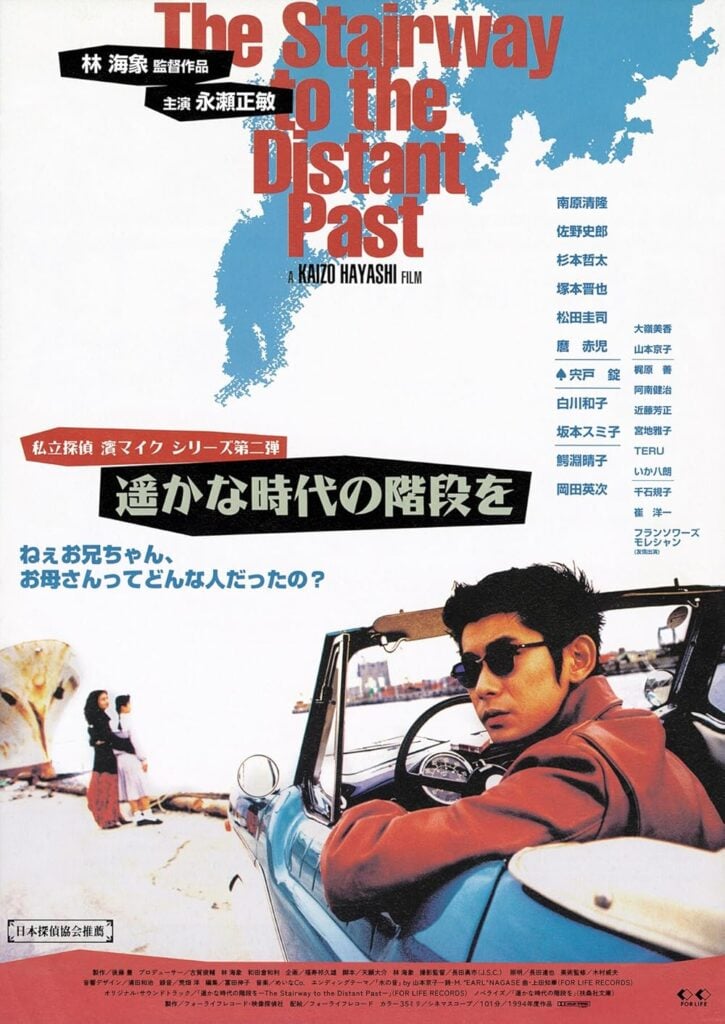
Broke, with his vintage Nash convertible repossessed, private eye Mike Hama is reduced to combing the mean streets of the Yokohama waterfront on a borrowed bicycle. But when Lily, a beautiful stripper from out of Hama’s past, returns to town, the fuse is lit on a criminal powder keg set to blow the lid off the Yokohama underworld.
Showtimes
In celebration of the 30th anniversary of THE MAIKU HAMA TRILOGY, we are presenting the Toronto Theatrical Premiere of the new restorations of each film from the trilogy!
Launched to stardom by Jim Jarmusch’s Mystery Train (1989), enigmatic actor Masatoshi Nagase thrives as the hardboiled detective wannabe Maiku Hama in Kaizo Hayashi’s trilogy of the same name, encompassing The Most Terrible Time in My Life (1993), The Stairway to the Distant Past (1995) and The Trap (1996). Stomping through the bustling-and-hustling port city of Yokohama, Hama operates out of a run-down movie theatre and his office sees every kind of customer: from rich ladies looking for runaway pups to serial murderers who look suspiciously like himself… Equal part American hardboiled detective pastiche, Seijun Suzuki-style Nikkatsu akushon send-up, and Masatoshi Nagase’s own new school comedic charmer, the Maiku Hama Trilogy is a cult phenomena of 90s Japanese cinema, presented here from its new 4K restoration. (KANI RELEASING)
Broke, with his vintage Nash convertible repossessed, private eye Mike Hama is reduced to combing the mean streets of the Yokohama waterfront on a borrowed bicycle. But when Lily, a beautiful stripper from out of Hama’s past, returns to town, the fuse is lit on a criminal powder keg set to blow the lid off the Yokohama underworld.
Cast/Crew Info
Director: Kaizo Hayashi | Cast: Masatoshi Nagase, Haruko Wanibuchi, Eiji Okada, Sumiko Sakamoto, Joe Shishido